



How to Organize a Storage Unit: A Practical Guide
A poorly organized storage unit turns into a dumping ground where you cannot retrieve anything without dismantling half the pile. A well-organized one works like your own personal warehouse: you walk in, grab what you need, and walk out. This guide explains how to get to the second scenario.
Prefer not to deal with the organization yourself? With Box2Box we store your items with a photographic inventory and deliver any article within 24h. See how it works →
Before putting anything in: the step most people skip
Most people make the same mistake: they fill the unit without thinking and then cannot find anything. Before loading a single item, spend 30 minutes planning.
Sort everything into three groups:
- Frequent use (seasonal clothes, sports gear, Christmas decorations): goes at the front of the unit, accessible without moving anything
- Occasional use (documents, books, spare appliances): in the middle or on shelves
- Archive or almost never (keepsakes, inherited items, things you will not throw away but never use): at the back or on top
This step alone will save you hours of searching over the coming months.
How to organize the space inside your storage unit
1. Use boxes of the same size
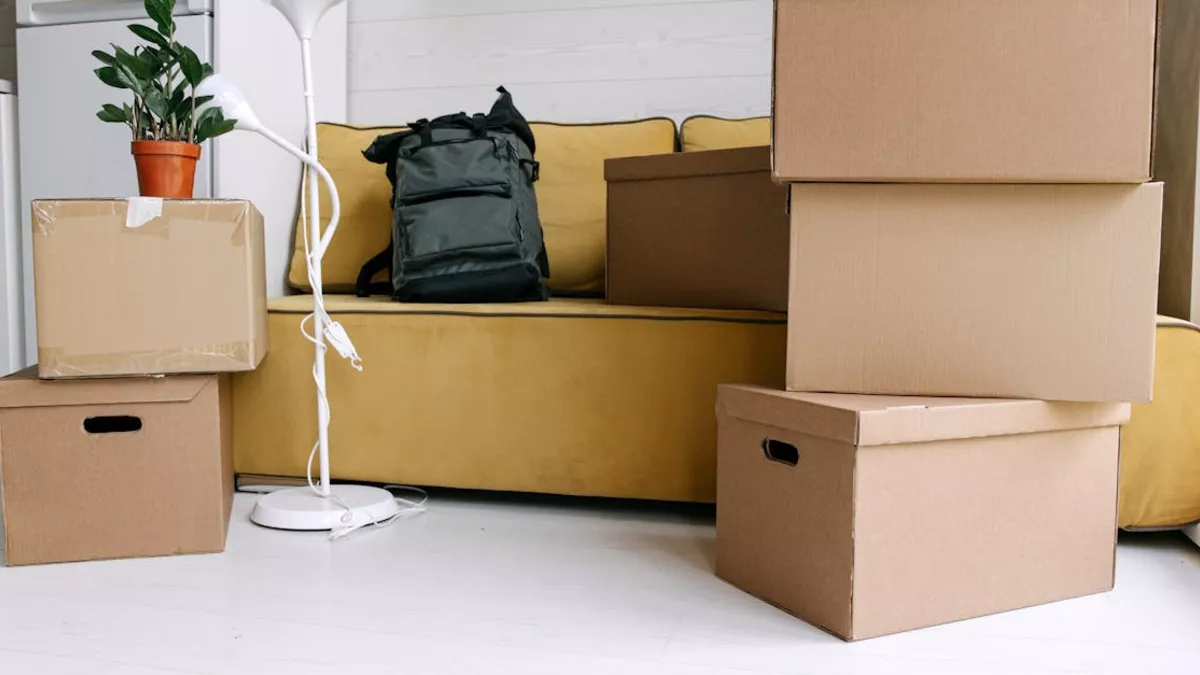
Uniform boxes stack better, support more weight, and make use of every inch up to the ceiling. Avoid mixing sizes or using bin bags — they deform and cannot be stacked.
Basic rule: heavy boxes on the bottom, light and fragile ones on top.
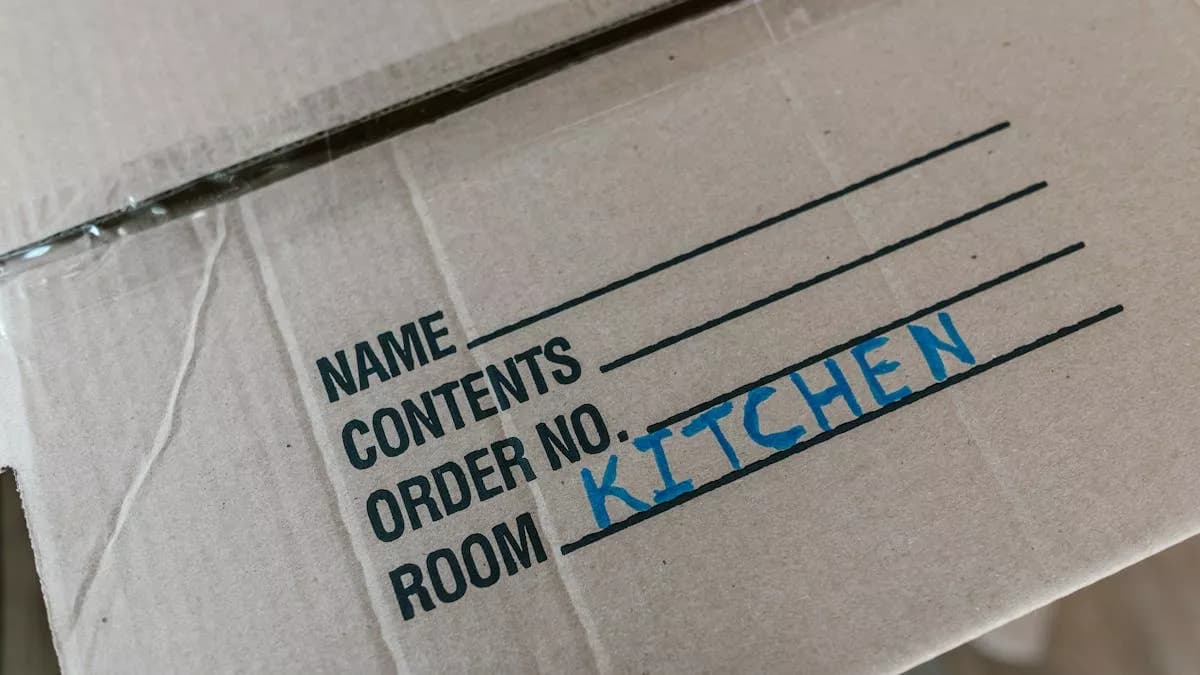
2. Label on two visible sides
Write the contents on at least two faces of each box. This way you can read the label without moving the box from its spot. Add a visible category (KITCHEN, WINTER CLOTHES, BOOKS) in large letters.
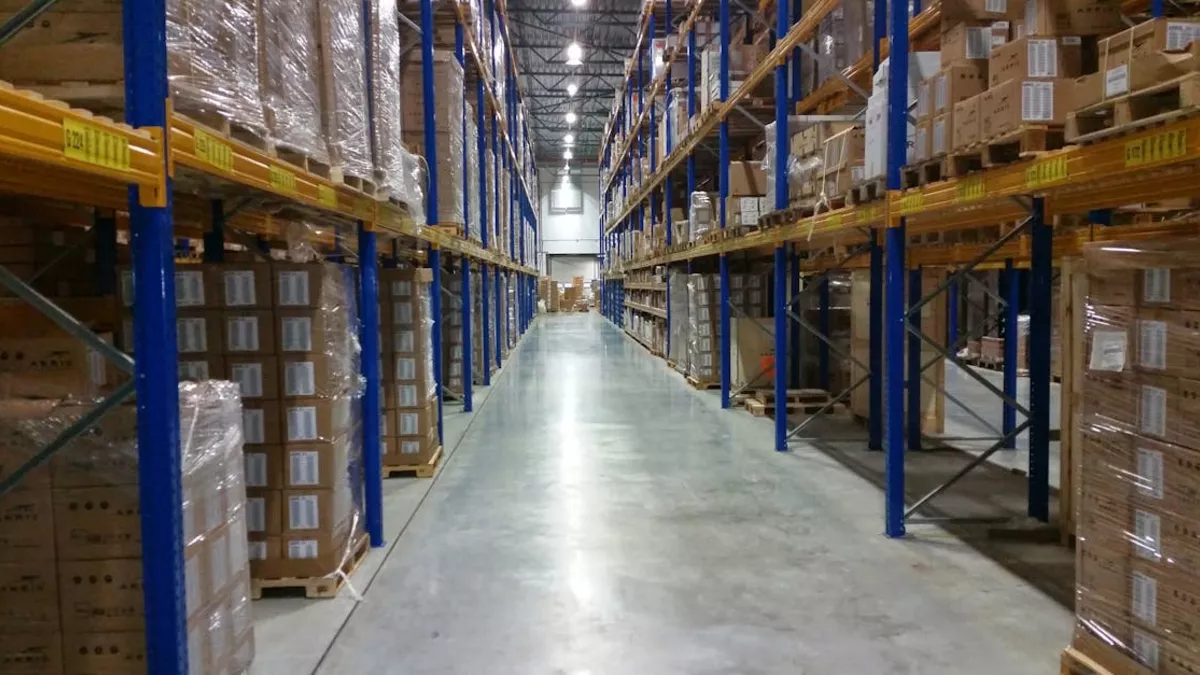
3. Install shelving to multiply your vertical space
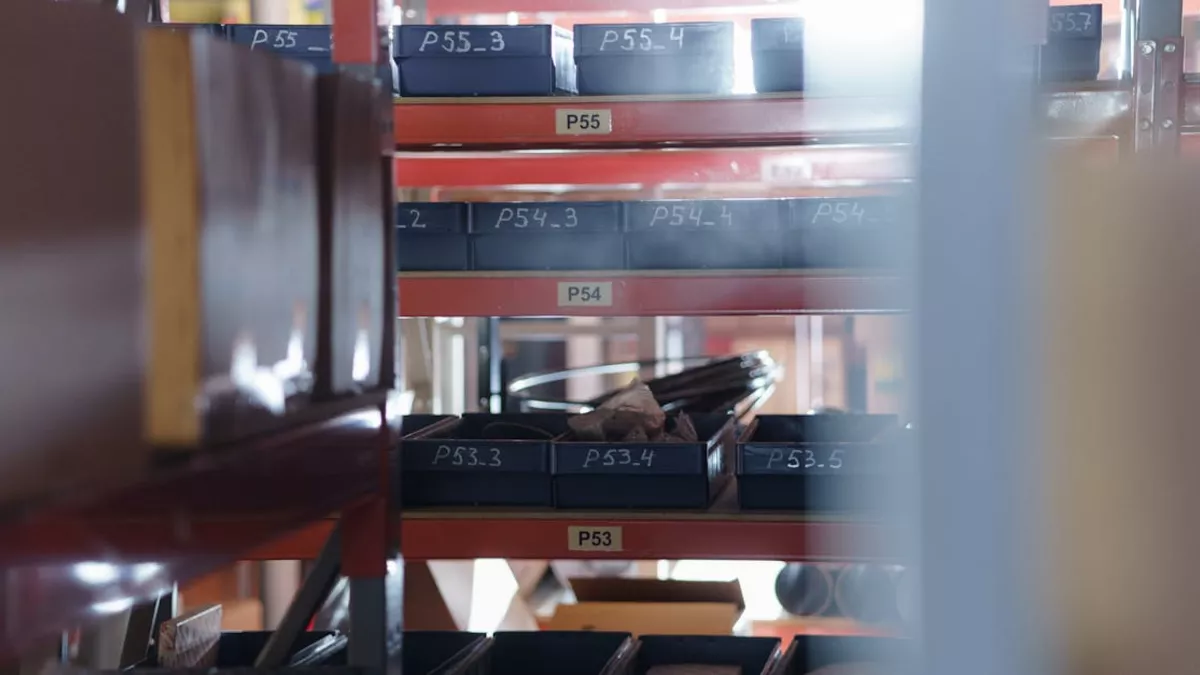
Without shelving, you only use the floor. With two or three shelf levels, you multiply usable space by 3 or 4. Choose metal freestanding shelves: they are sturdy, resist moisture, and adapt to any ceiling height.
4. Create a central access aisle
Always leave an aisle of at least 60 cm from the entrance. This is the difference between a unit that works and one where you have to shift everything to reach the back.
5. Protect fragile and moisture-sensitive items
- Fragile objects: wrapped in bubble wrap, never at the base of a stack
- Wood and textiles: raised off the floor with pallets or boards to avoid moisture
- Clothes and documents: stored in airtight boxes or vacuum bags
- Electronics: in their original packaging if you still have it; otherwise, in rigid padded boxes
6. Put what you use most at the front
Items you need each season — skis in winter, towels and beach chairs in summer — should be accessible without moving anything else. Reorganize the unit at the start of each season: 30 minutes twice a year will save you frustration the rest of the time.
Common mistakes when organizing a storage unit
| Mistake | Why it fails | Solution |
|---|---|---|
| Throwing everything in without order | You cannot find anything afterwards | Sort by frequency of use before loading |
| Unlabelled boxes | You open 10 boxes to find one item | Label on 2 sides with a visible category |
| Stacking on the floor with no shelves | You waste 2/3 of the space | Install metal shelving from day one |
| No central aisle | Access to the back is blocked | Reserve 60 cm from the entrance |
| Storing damp or unprotected items | Moisture or pressure damage | Raise off the floor and use airtight boxes |
| Mixing everything in the same area | Chaos with no solution | Zone by category from the start |
What you should never store in a storage unit
Some items are not suitable for external storage:
- Food (perishable or non-perishable): attracts pests and is not permitted
- Flammable substances: petrol, solvents, aerosol paints
- High-value items without specific insurance: jewellery, cash, irreplaceable original documents
- Live animals or plants: obvious, but worth stating
- Lithium batteries in large quantities: fire risk
Always check the contract terms for each provider's specific restrictions.
The inventory: the key detail that makes the difference
An organized storage unit needs an up-to-date record of what is inside. Without an inventory, over time you will forget what you stored and where it is.
Options for keeping an inventory:
- Spreadsheet or note with the contents of each numbered box (minimum viable approach)
- Photos per box saved on your phone (faster to look up)
- Inventory app for storage units (search by category, access reminders)
The effortless alternative: Box2Box
With Box2Box you do not need to inventory anything manually. At pickup, we photograph and log every item. From the app you can:
- See exactly what you have in storage and in which box
- Request delivery of a specific item within 24h
- Add or remove items without visiting any warehouse
See how Box2Box works in Madrid → · Barcelona → · Valencia → · Seville → · Malaga →
Need furniture storage? See prices in Madrid, Barcelona, Valencia, Seville and Malaga.
Storage unit maintenance: seasonal check-up
An organized storage unit does not stay that way forever if you never revisit it. We recommend a quick review at each change of season:
- Rotate seasonal items: move forward what you will need in the coming months, push back what you will not
- Check the condition of boxes and wrapping: replace bubble wrap if it is worn, check that boxes are not damp
- Update the inventory: note what you take out and what you put in
- Check the labels: if any are hard to read, replace them
Two 30-minute reviews per year will keep your storage unit fully functional at all times.
FAQ about organizing a storage unit
How long does it take to organize a storage unit properly?
The initial setup takes 2–4 hours for a medium-sized unit (3–4 m²). This includes sorting items into categories, installing basic shelving, labelling boxes, and arranging everything with an access aisle. Seasonal reviews afterwards take only about 30 minutes each.
What is the best box size for a storage unit?
Standard moving boxes (approximately 40 × 40 × 40 cm) are the most versatile. They are large enough to hold a useful amount, small enough to lift comfortably, and stack neatly. For heavy items like books, use smaller boxes so the weight stays manageable.
Should I use plastic bins or cardboard boxes?
Both work, but they serve different purposes. Cardboard boxes are cheaper, lighter, and fully recyclable — ideal for short-to-medium storage periods. Plastic bins are better for long-term storage or moisture-prone environments because they seal tightly and resist water. For most people, cardboard with proper labelling is more cost-effective.
Do I need shelving in a small storage unit?
Yes. Even in a 1–2 m² unit, a single shelving rack dramatically improves accessibility. Without shelves you end up stacking boxes on the floor, which means the bottom box is always the one you need. Freestanding metal shelves are inexpensive and take minutes to assemble.
How do I prevent mould and moisture in a storage unit?
Keep items off the floor using pallets or shelf racks. Use desiccant packs or silica gel sachets inside sealed boxes. Avoid storing damp or freshly washed items. If the facility does not have climate control, wrap textiles and leather in breathable fabric covers rather than plastic bags, which can trap condensation.
Ready to start?
Get your quote in under 2 minutes
No contracts. Free collection at home included in Locker and 2 m².

María García
Logistics and storage specialist with 8+ years of experience in the self storage sector in Spain.